Emergency Tree Service
Based near 6045 Belle Grove Rd, Brooklyn, MD — Serving Baltimore, Anne Arundel, Harford & Howard Counties
Credentials & Coverage Upfront
ISA-Certified Arborists • Maryland Licensed Tree Expert (LTE) • Fully Insured • ANSI A300 / Z133 safety practices
These credentials allow us to stabilize dangerous trees, coordinate heavy equipment, and work safely around homes.
Why is immediate emergency tree care important?
Rapid response reduces risk to people, structures, and utilities after high wind, heavy rain, or ice. Compromised trunks, uprooted root plates, and suspended or partially failed limbs can shift unexpectedly. A prompt assessment by a qualified emergency arborist identifies failure points, sets safe work zones, and prioritizes actions such as controlled removals, limb takedowns, and debris clearing to make the area secure.
What counts as a tree emergency?
- Trees or large limbs on a roof, fence, vehicle, or blocking access
- Leaning trees with failed roots or severe trunk cracking
- “Hanger” limbs lodged in the canopy after breakage
- Trees impacting service lines or obstructing driveways and entrances
Homeowners often search emergency tree service near me, emergency tree removal, or tree service emergency when these situations occur. Our role is to make the site safe, then outline next steps for removal and cleanup.
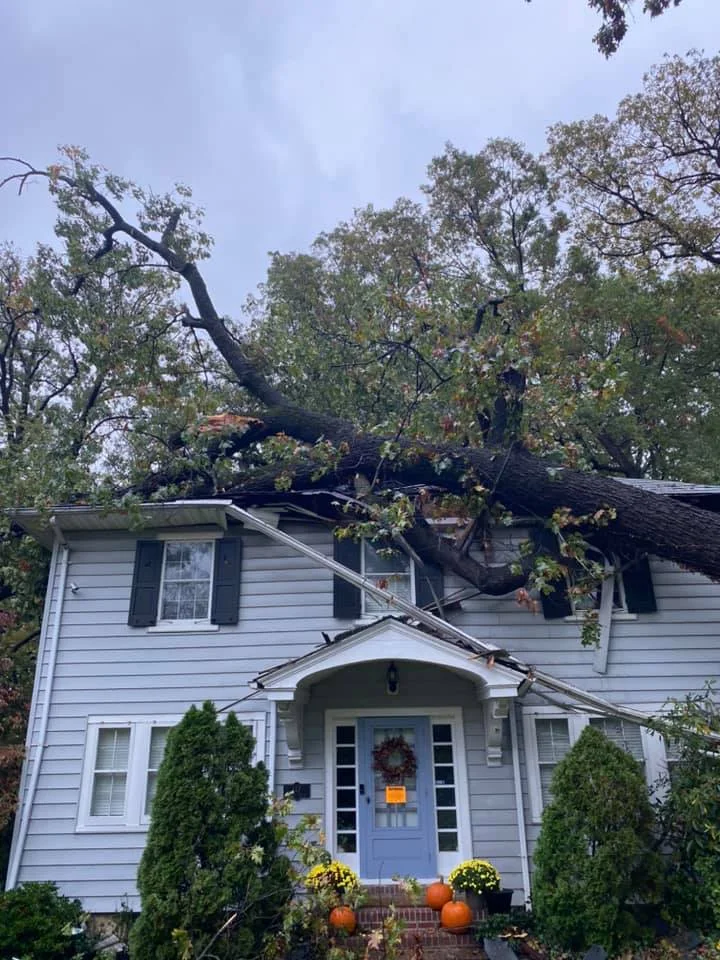
- We secure the site and mark safe zones
- We assess structural failure and utilities
- We prioritize hazards and stabilize where needed
- We provide a clear plan for removal and cleanup
How the emergency response works
A certified arborist evaluates structural failure, overhead hazards, utilities, and ground conditions. We establish safe zones, identify rigging anchors, and confirm access for lifts or cranes as needed.
Debris is stacked for later hauling or loaded if haul-away is part of the scope. When appropriate, we can discuss temporary tarping or basic coverings to limit exposure until permanent repairs are arranged.
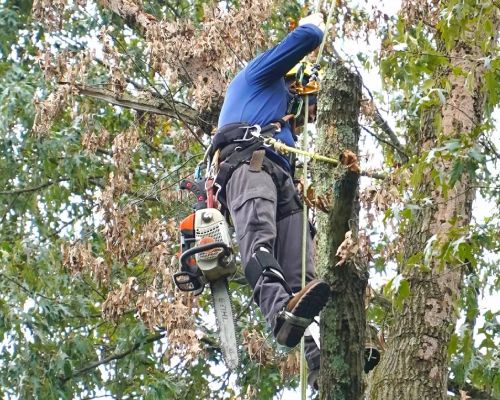
Crews remove or secure dangerous limbs and sections to prevent further movement. We use rope systems, aerial lifts, or cranes to control each cut, especially with compromised wood or limited drop zones.
Damaged wood is dismantled in manageable pieces. Roof, siding, and landscape protection is used where practical. Driveways and access points are cleared early when possible to restore safe movement.
If full removal cannot be completed immediately due to weather, access, or darkness, we schedule continuation work and provide a clear, written plan for completion and site restoration.
Typical Emergency Services Provided
- Emergency tree removal & limb takedown
- Emergency tree trimming to remove hangers
- Crane-assisted removals & aerial platform work
- Debris clearing and temporary protections
Insurance & Documentation Support
We can provide documentation describing the tree’s condition and the steps taken to secure the site. While coverage varies by policy, many homeowners request photos and written summaries for claims involving roof impact, fence damage, or blocked access. We’ll outline the work performed, note site conditions, and list any follow-up services planned.
Cost factors for Emergency Tree Service
Emergency tree removal cost depends on urgency, access, equipment needs (e.g., crane), size and condition of the tree, debris handling, and time of day. If you’re comparing emergency tree removal cost or looking for an emergency tree removal company, expect pricing to reflect risk level and complexity. We explain the plan and scope before work begins so you understand the steps and timeline.
Safety Standards & Utilities Coordination
Emergency work is done under ANSI safety protocols with added precautions for unstable wood and poor footing. Where overhead or service lines are affected, we coordinate our work plan around utility provider guidance and safe clearances. Crews use protective mats, rigging, and controlled lowering to reduce secondary damage during storm cleanup.
FAQs
Frequently Asked Questions
Can you work while it’s still storming?
We wait until conditions are safe enough to operate equipment and work aloft. Once winds and lightning subside to safe limits, we proceed with stabilization and removals.
Will you remove debris the same day?
It depends on access, weather, and daylight. Our first priority is hazard removal and site safety; debris hauling may occur the same day or be scheduled promptly afterward.
Do you provide 24-hour emergency tree removal?
We prioritize storm calls and aim for rapid response. Actual timing depends on weather, crew availability, and call volume. We’ll give you a realistic plan when you contact us.
Can you save a damaged tree instead of removing it?
If structural integrity allows, targeted pruning may remove hazards and retain the tree. Severe trunk, root, or crown damage typically requires removal.
What should I do if a tree is near power lines?
Keep a safe distance and do not attempt to move branches. Report utility issues immediately; we coordinate our plan around utility guidance and safe clearances.
Get an estimate
Scheduling Emergency Service
Storms are stressful, but next steps don’t have to be. When you reach out, a certified arborist will review the situation, explain the safest approach, and help you protect your home while we plan the cleanup and removal.